PC1/PC2 Mechanomimetics
Polycystin mechanosensing complex
Age-related osteoporosis
Obesity and metabolic disease
Lead optimization
DiscoveryIND-enablingClinical
Oak Ridge Therapeutic Discovery, LLC
ORRxD is developing first-in-class oral small-molecule therapies that target the PC1/PC2 polycystin complex and related pathways with genetically supported roles in skeletal and metabolic health.
Privately held · Preclinical-stage biotechnology company
Our science
The PC1/PC2 polycystin complex helps cells translate mechanical forces into biological responses. ORRxD’s mechanomimetics are designed to activate or stabilize this complex, reproducing beneficial signals associated with skeletal loading and metabolic regulation.
Our discovery approach integrates human genetics, disease biology, structure-guided chemistry and translational pharmacology to advance differentiated oral therapeutics.
Preclinical evidence
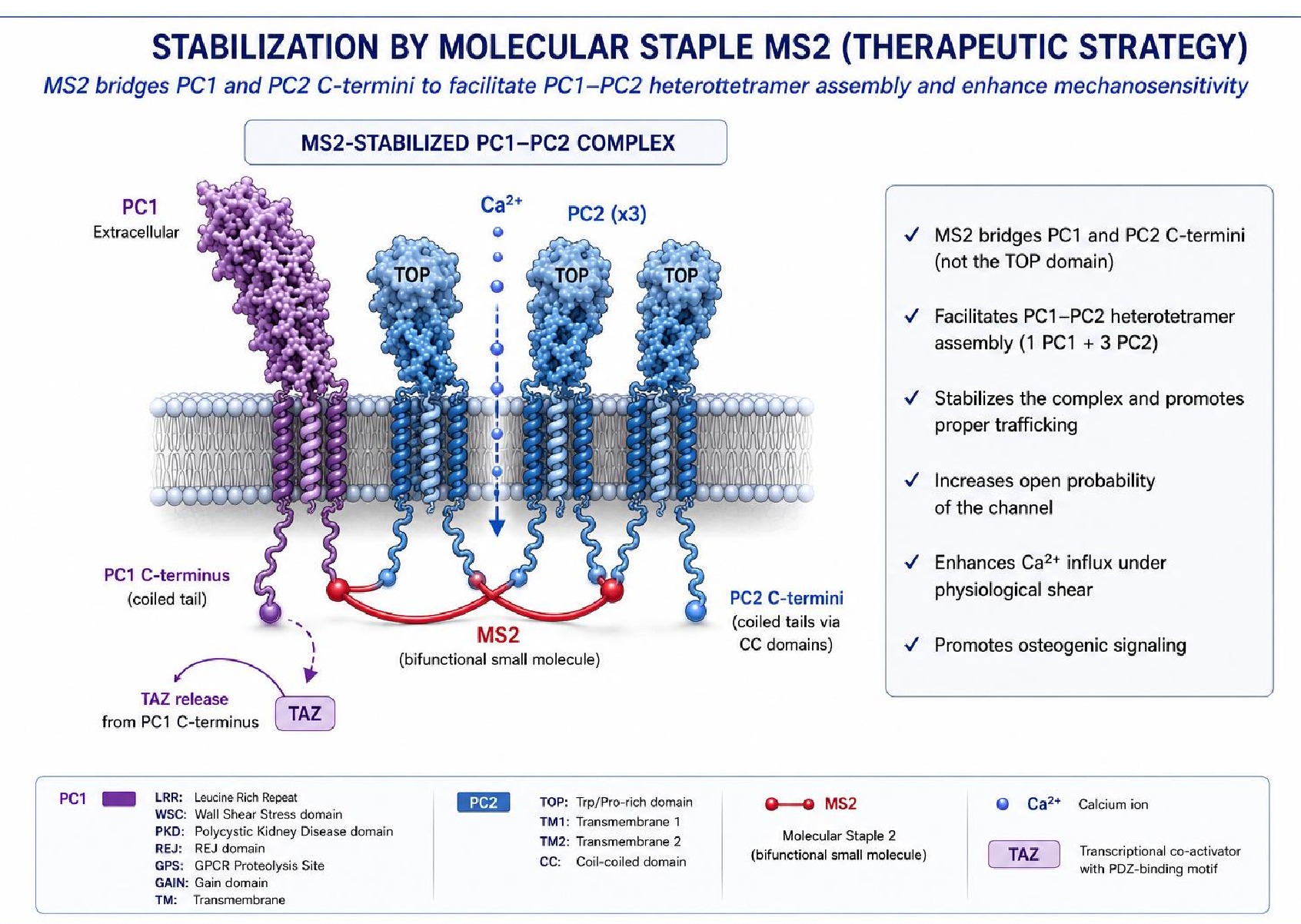
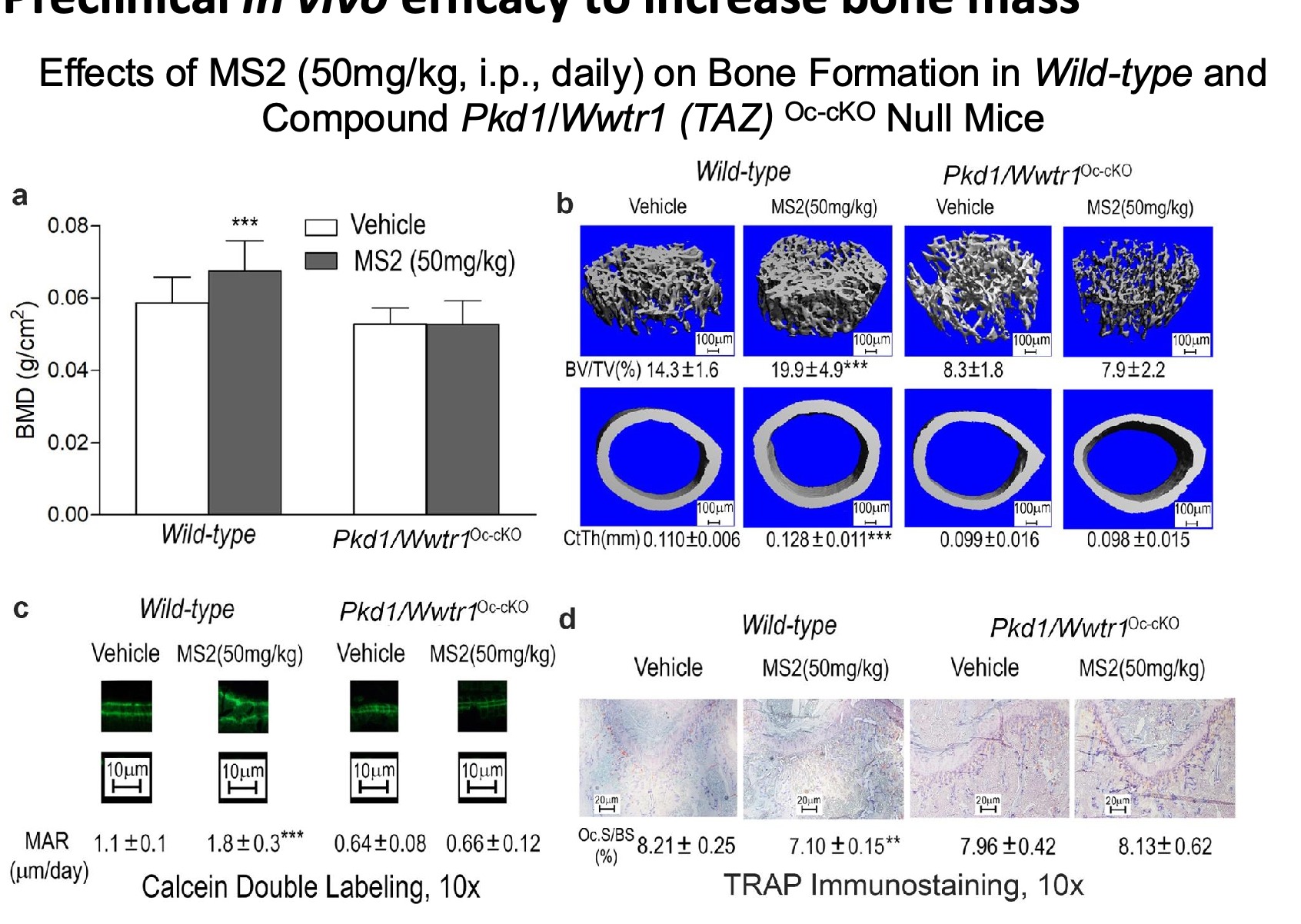
ORRxD’s foundational MS/MS2 series is designed to stabilize the PC1/PC2 mechanosensing complex. Results shown below are preclinical and do not establish safety or efficacy in humans.
Therapeutic context
| Feature | MS/MS2 mechanomimetics | PTH analogs | Anti-sclerostin antibody |
|---|---|---|---|
| Primary mechanism | PC1/PC2 complex stabilization and activation | PTH1 receptor agonism | Sclerostin inhibition |
| Modality | Small-molecule research series; oral development objective | Injectable peptide | Injectable monoclonal antibody |
| Bone evidence | MS2 increased bone volume and cortical thickness in wild-type mice | Clinically validated bone-anabolic class | Clinically validated bone-anabolic class |
| Metabolic signal | Reduced adiposity and body-weight measures in preclinical mouse studies | Not a primary therapeutic objective | Not a primary therapeutic objective |
| Direct PC1/PC2 targeting | Yes | No | No |
| Development status | Preclinical | Approved therapeutic class | Approved therapeutic class |
Comparisons describe mechanism, modality and development status; they are not head-to-head efficacy claims. MS2 findings are from animal studies.
Pipeline
Development stages are estimates and may change as preclinical studies progress.
Polycystin mechanosensing complex
Obesity and metabolic disease
FGF23 signaling
Kidney–bone axis
GPRC6A
Diabetes, obesity and fatty liver disease
Leadership & advisors
Professor Emeritus, UTHSC · Adjunct Professor, Duke University
Inventor and bone–mineral metabolism researcher
Company formation and business strategy
Life-sciences intellectual property strategy
Translational and biopharmaceutical development
Investors & strategic partners
ORRxD welcomes conversations with investors, pharmaceutical partners and research collaborators interested in differentiated therapies for osteoporosis, obesity and related metabolic disorders.
Start a conversationNews
Oak Ridge Therapeutic Discovery, LLC (ORRxD) won the inaugural Innovation Pitch Competition at the American Society for Bone and Mineral Research (ASBMR) 2026 Annual Meeting in Boston. Founder and CEO L. Darryl Quarles, M.D., presented ORRxD’s preclinical mechanomimetic program, which is developing oral small molecules targeting PC1/PC2 mechanosensing for osteoporosis and related skeletal disorders.
The competition brought emerging companies before a panel of clinical, academic and industry experts to present innovations in bone, mineral and musculoskeletal health.
About the ASBMR competition (opens in a new tab)ORRxD was selected as a finalist in the 2026 Lilly Grand Challenge, organized by Nucleate in collaboration with Eli Lilly and Company. L. Darryl Quarles, M.D., represented ORRxD at the September 21–22 finalist event in Indianapolis, presenting the company’s mechanomimetic research and development strategy.
The 2026 challenge focused on healthy aging, including mobility, resilience and regenerative medicine—areas aligned with ORRxD’s research into age-related bone loss.
About the Lilly Grand Challenge (opens in a new tab)Contact
For investment, partnering, scientific and corporate inquiries.
hq@orrxd.com5100 Poplar Avenue, Suite 2700 · Memphis, Tennessee 38137